The Boxed Bed · Pillow Guide
Down Pillow Loft, Fill, and Care: What to Know Before Choosing
A down pillow’s appeal is immediate: a soft landing, an airy feel, a little quiet luxury at the end of the day. But the right one is not chosen by softness alone. Loft, construction, sleep position, and the realities of care all shape how a pillow feels—and whether it continues to feel that way.
Published October 22, 2026
In the bedroom, the smallest decisions can have an outsized effect. A pillow may occupy little visual space, yet it sits at the delicate intersection of comfort and alignment: beneath the head, beside the cheek, and close enough to notice every change in height or texture. Down pillows are often prized for their lightness and soft, yielding character. Still, “down” is not a complete description of how a pillow will perform. Two pillows with similar filling can feel quite different because their loft, chamber design, fill distribution, and shell construction are not necessarily the same.
Choosing thoughtfully means looking beyond a plush first impression. Consider how much elevation feels natural, how you tend to sleep, whether the pillow keeps its shape as you move, and what maintenance the care label permits. These details turn a broad category into a more personal decision—and help distinguish a pillow that looks inviting on the bed from one that suits your nightly routine.
This guide explains the elements worth comparing, with practical questions to take into the shopping process. It is general home and bedding information, not medical advice; persistent neck pain, numbness, or other symptoms are best discussed with a qualified health professional.
First, what does “down” mean?
Down refers to the fine, soft clusters found beneath the outer feathers of waterfowl. Unlike a feather, a down cluster has no central quill. Its branching structure helps trap air, which gives down its characteristic loft and warmth for its weight. In a pillow, that can translate into a light, compressible feel that responds to pressure and can be reshaped with a gentle fluff.
The label alone, however, does not tell you everything about a pillow’s contents or sensation. Products may differ in fill composition, quantity, processing, and construction. Read the product details and care label rather than assuming that every “down pillow” has the same softness, height, or maintenance needs. If animal-derived materials are a concern, check the stated fill and sourcing information and consider whether a different material better reflects your preferences.
Down’s appeal is often its pliability: it can compress beneath the head, then regain some volume when released. That flexibility can feel wonderfully relaxed, but it also means the pillow may behave differently from a more structured foam design. A shopper who wants a consistent, distinctly elevated platform may prefer a pillow with a different construction or a more substantial profile. The best choice is not a universal one; it is the one whose feel and support suit the person using it.
Loft: the question of height
Loft describes a pillow’s height, especially as it rests on the bed before and during use. A low-profile pillow offers less elevation, while a higher-loft option begins with more volume. Yet a pillow’s starting height is only part of the story. Fill can compress under the weight of the head, and the amount of compression depends on the pillow’s construction, the sleeper, and how the pillow is positioned.
Think of loft as a relationship rather than a ranking. The question is not simply whether a pillow is low or high, but whether its compressed height feels comfortable for your body and usual sleep posture. A pillow that seems lofty in a product photograph may settle considerably when used. Conversely, a low-profile style may feel just right to someone who prefers a gentler elevation.
Sleep position offers a useful starting point, though it is not a rulebook. Side sleepers commonly look for enough height to fill the space between the shoulder and head without forcing the neck upward. Back sleepers may prefer a more moderate elevation that feels supportive without tipping the head forward. Stomach sleepers often find a lower profile more comfortable because excessive height can place the neck at an awkward angle. Individual body shape, mattress softness, shoulder width, and personal comfort all affect the outcome.
If you change positions during the night, consider how adaptable the pillow feels rather than judging it only in one pose. A compressible fill may be easy to reshape, while a more structured pillow may preserve a steadier contour. If possible, look for a clear description of the pillow’s profile and construction, and understand the seller’s return or trial terms before buying. Those practical details can be especially useful when a pillow cannot be tested at home before purchase.
Fill and construction: why the interior matters
Fill influences softness and resilience, but the way it is arranged can be just as important. An open, loosely filled pillow may feel airy and easy to mold. A design that divides filling into chambers can help keep material more evenly distributed, limiting the tendency for everything to migrate toward one side. Construction is not a guarantee that a pillow will retain its original feel forever, but it can offer useful clues about how the filling is managed.
A five-chamber pillow, for example, uses internal compartments to organize the fill. This approach is intended to help maintain a more balanced shape and reduce shifting. The experience still depends on the pillow’s particular materials and use, so consider the chamber design alongside profile, softness, and the maker’s care instructions. A thoughtful construction detail is most useful when it addresses a preference you actually have—such as wanting the pillow to feel less lumpy or more consistent from night to night.
Fill amount also affects the balance between plushness and resistance. A softly filled pillow may compress readily and feel cloudlike, but a sleeper who wants more lift may prefer a fuller or firmer design. A pillow can be described as soft while still having construction intended to help it keep its shape; those qualities are not mutually exclusive. Product language is a starting point, not a substitute for checking the dimensions, profile, and detailed construction description.
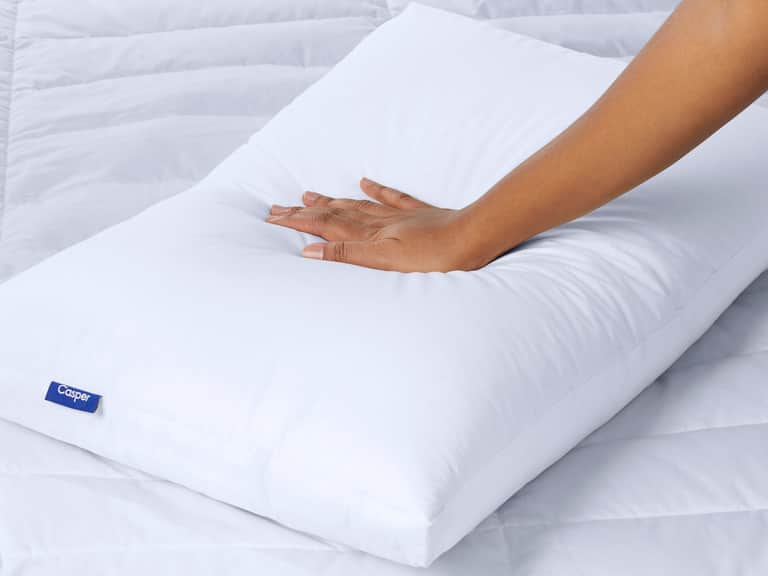
For a concrete example, the Down Pillow Double Pack is described as a soft, low-profile down option with a five-chamber design intended to help maintain its shape. It includes two pillows and identifies its material as ethically sourced down. These details may appeal to someone seeking a lower elevation and a design organized to limit shifting. They do not, on their own, establish that the pillow will suit every sleep position or preference, so compare the profile and construction with your own needs.
A practical way to compare pillow profiles
Descriptions such as “low,” “medium,” and “high” can be helpful, but they are not always standardized across brands. Whenever product information allows, compare stated dimensions and construction, then look for a clear explanation of how the pillow is expected to feel under pressure. The most useful comparison is between options within the same brand or product family, where the terms may be applied more consistently.
Before choosing, ask yourself a few simple questions. Do you naturally fold or scrunch your pillow? Do you prefer to settle into it or rest more on top of it? Does a pillow that feels comfortable at bedtime still feel comfortable after you roll onto your side or back? These habits can reveal whether you value moldability, stable elevation, or a particularly soft surface.
- For a softer, moldable feel: Look for clear information about fill and how readily the pillow compresses.
- For a lower elevation: Seek an explicitly low-profile description, and consider how the fill may settle under your head.
- For more shape consistency: Review whether the pillow uses chambers or another construction feature intended to manage fill distribution.
- For easy upkeep: Confirm what the care label allows before purchase; do not infer washability from the fill type alone.
- For shared use: If buying a pair, remember that two matching pillows may not suit two different sleepers equally well.
These questions are more revealing than an abstract search for the “best” pillow. Comfort is personal, and the right choice balances a pillow’s design with the way you rest. When two people share a bed, choosing different profiles can be more practical than aiming for a perfectly matched bedside arrangement.
Care: protect the pillow, not just the bedding
Care is part of the buying decision, not an afterthought. Down and down-filled products can have specific cleaning requirements, and those instructions vary. Some pillows may be machine washable; others may call for spot cleaning or professional care. Never assume that a pillow is washable because it is made from down—or because another down pillow you own can be washed. Read the care label supplied with the exact product and follow it closely.
Before washing, check whether the instructions permit machine cleaning, what water temperature is appropriate, which detergent to use, and whether the pillow can be tumble dried. If drying is permitted, make sure the pillow is fully dry before returning it to the bed. Incomplete drying can leave moisture inside the fill, potentially affecting freshness and the pillow’s condition. Follow any instructions about drying time, heat, or adding dryer balls rather than improvising.
A removable pillow protector can help keep perspiration, skin oils, and everyday dust from reaching the pillow itself. Wash the protector and pillowcase on a regular schedule that suits your household, and air the pillow when the care guidance allows. A gentle fluff can help redistribute the fill after use, particularly for a pillow designed to be reshaped. These simple habits may support a fresher sleep surface, but they do not replace the product’s specific cleaning instructions.
Look for care information before checkout, especially if you need a pillow that can be cleaned at home. If the instructions are unclear, contact the manufacturer or retailer rather than relying on generic advice. The distinction matters: an overly hot wash, unsuitable detergent, or insufficient drying could damage a pillow or compromise its feel. A low-maintenance routine is only low-maintenance when it is compatible with the materials and construction.
Shape, settling, and everyday upkeep
Even a well-made pillow may change subtly with use. Fill compresses, the shell relaxes, and a pillow that is handled night after night may need occasional fluffing to recover a more even shape. That is part of the nature of a soft, responsive material. A chambered design may help keep fill distributed, but no construction should be treated as a promise that the pillow will remain exactly as it was on its first night.
Pay attention to the way the pillow behaves over time. If it repeatedly bunches, feels uneven, or no longer offers a comfortable height, reassess whether it still meets your needs. A pillow protector and clean pillowcase can reduce direct exposure to oils and moisture, while careful adherence to the label helps avoid unnecessary wear. Store spare pillows in a clean, dry place, and avoid compressing them for long periods unless the manufacturer’s guidance says that is suitable.
When considering longevity, look at more than the fill. Shell fabric, seam construction, chambering, use, and care all play a role. A pillow with a reassuring description is not necessarily maintenance-free, and a washable label does not mean it can withstand any cleaning method. The most dependable approach is to treat the care instructions as part of the product’s design.
Allergies, sourcing, and personal priorities
Material choice is also a matter of comfort beyond softness. People with sensitivities may want to review the product’s stated fill, shell, and cleaning guidance, and consult a healthcare professional about persistent allergy symptoms. A pillow protector may offer an additional barrier against common bedroom dust, but it is not a substitute for individualized medical advice or a guarantee that symptoms will be prevented.
For shoppers attentive to sourcing, look for specific, verifiable statements about the origin or standards associated with the fill. Words such as “ethical” are meaningful only when the product information provides enough context for you to understand what is being claimed. If the details matter to your purchase, seek clarification from the seller or manufacturer and retain the product documentation.
Temperature preferences matter, too. Down is often valued for warmth and lightness, but the sensation of sleeping on a pillow depends on the full design, including the shell, surrounding bedding, room temperature, and personal sensitivity to heat. If you tend to sleep warm, consider the entire sleep setup rather than expecting one material label to predict your experience precisely.
A concise checklist before choosing
When a product description feels crowded with claims, return to the essentials. A considered purchase should make it reasonably easy to understand what is inside the pillow, how high it is intended to feel, and what care it requires.
- Profile: Is the pillow described as low, medium, or high loft? Are dimensions provided?
- Fill: What material is used, and is the fill composition explained clearly?
- Construction: Does the design use chambers or another method to manage distribution?
- Feel: Is it soft, firm, moldable, or structured—and how does that compare with your preference?
- Care: Can it be washed at home, and what exact method does the label recommend?
- Fit: Does the stated profile make sense for your usual sleep position and body comfort?
- Practicalities: Check sizing, what is included, return terms, and any relevant sourcing details.
The considered choice
A good down pillow is not simply the puffiest one, nor necessarily the most expensive or most elaborately described. It is the pillow whose loft feels right, whose construction behaves in a way you appreciate, and whose care requirements fit the life you actually lead. For some, that means a soft, low-profile design that compresses gently. For others, it means a more substantial pillow or a different fill altogether.
Start with the sensation you want, then verify the details that shape it: fill, height, chamber design, and care. A low-profile, five-chamber option such as the Down Pillow Double Pack may be worth considering if those characteristics match your preferences. As with any bedding choice, the product description is a guide—not a guarantee of personal comfort. Take time to compare, read the label, and choose for your own sleep habits rather than an idealized version of them.
In the end, the most elegant bedroom decisions are often the most quietly practical. A pillow that suits your posture, feels pleasant through the night, and can be cared for as directed brings a small but meaningful sense of ease to the daily ritual of going to bed.